Emergency Medical Services

The Lenoir County EMS is a division of Lenoir County Emergency Services that provides treatment and transport for the sick and injured in Lenoir County. As a fast-paced EMS system, Lenoir County EMS offers a safe and clinically progressive environment for our EMS providers. We currently staff four shifts 24 hours on/72 hours off rotation, operating out of six EMS stations located throughout the county. Each shift is led by a shift supervisor (Battalion Chief) and assistant shift supervisor (Captain), both of which operate a quick response vehicle (QRV) that provides support and additional resources to our EMS units. Our EMS agency is currently led by a Training Officer and an EMS Division Chief, both of which also operates a QRV for administrative responsibilities as well as additional response resources.


Want to apply?


Interested in a new and exciting career?

Emergency medical services is a unique opportunity to give back to your community by taking care of those sick or injured. Our job is fast-paced, unpredictable, and incredibly human. On any given shift working on an ambulance, you may treat someone having a heart attack, splint a broken bone, or help birth a newborn into the world. There’s no such thing as a “typical day” in EMS.

To work in EMS, you must carry an EMS credential issued by the NC Office of EMS. There are three different levels of credentials that we employ at Lenoir County EMS:

  • Emergency Medical Technician (EMT)
    • Entry-level, providing basic emergency care.
    • Usually 6-8 months of training.
  • Advanced Emergency Medical Technician (AEMT)
    • Must be an EMT first.
    • Like EMT, but with additional skills and medications added to your scope of practice.
    • Usually an additional year of training.
  • Paramedic
    • Must be an EMT or AEMT first.
    • Advanced prehospital provider
    • Usually takes 1-2 years of training.

You must successfully complete an initial credentialling course and pass the NC state exam to obtain an EMS credential. Most community colleges regularly host these initial credentialling courses year-round. We support our employees pursuing advanced EMS credentials. 

For more detailed information contact your local community college (Lenoir Community College 252-223-6888) or if you have more questions contact our office at 252-559-1911.

Question about billing?

Lenoir County EMS contracts with EMS Management and Consultants (EMSMC) to bill for services provided by our EMS agency. For questions concerning billing, submitting insurance information, or making a payment you can visit https://emsmc.com/patient-portal/ or call 800-814-5339.

Need an EMS standby?

If you are hosting an event that you wish to have EMS on site and dedicated to your event, our EMS division provides services for special events and functions. We can provide a quick response vehicle (QRV) or an ambulance with transport capability staffed with appropriate personnel. The event coordinator will be billed for this service. Contact our office for more information.

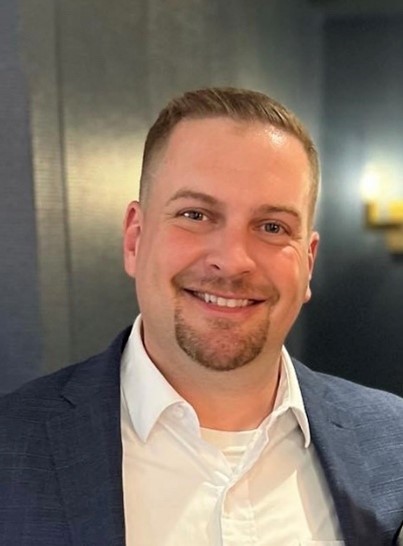
 

Mark Casey

EMS Division Chief

george.caseylenoircountync.gov


John Tripp

EMS Training Officer

john.tripp@lenoircountync.gov


Dr. Andrew Mealin

Medical Director


Shift Supervisors

A-shift Battalion Chief:

Ray Barwick

B-shift Battalion Chief:

Jami Hardee

C-shift Battalion Chief:

Amanda Campbell

D-shift Battalion Chief:

WT Davis


Lenoir County Emergency Services Department
Phone:
252-559-1911

Physical Address:
200 Rhodes Avenue
Kinston, NC 28502

Mailing Address:
PO Box 3289
Kinston, NC 28502

Hours of Operation:
Monday – Friday: 8:00am – 5:00pm

Director: Norman Bryson
Fire Marshal: Jacob Turner

Frequently Asked Questions

Dial 9-1-1 in an emergency only. If an emergency situation (a crime, fire, serious injury or illness) arises, ask yourself whether police, fire department, or medical assistance is needed right now to protect life or property. If the answer is “yes”, then immediately dial 9-1-1 and advise the telecommunicator of what has happened or is happening.

If you are not sure whether or not the situation is an emergency, call 9-1-1 and let the our telecommunicators make that determination. Always call 9-1-1 to report a fire, report a possible medical emergency, or to report a crime in progress.

  • Stay calm. Give the telecommunicator your name, location, and nature of the emergency.
  • Listen carefully to the telecommunicator.
  • When the telecommunicator asks you questions, try to answer them as accurately as possible. Speak clearly and slowly.
  • Do exactly as the telecommunicator tells you during the course of the call.
  • Never hang up until you are told to do so.
  • Our telecommunicators are certified in Emergency Police DIspatch, Emergency Fire Dispatch, and Emergency Medical Dispatch through the National Academy of Emergency Dispatchers. This means when you call Lenoir County Communications your call is being handled by trained professionals following national protocols and standards of care.

Responders are dispatched upon receiving address and telephone; however, additional information is needed to better prepare the responders for their arrival on scene and to provide the best level of service for the nature of the call.

Lenoir County EMS uses a third party billing company, EMS Billing and Management. You may obtain their information here: https://emsbilling.com/patient.

You may burn vegetative (yard) debris, ie: leaves, limbs, etc; however, it must be from your yard. You may not transport vegetative debris from other locations and burn them on your property. Always be aware of the wind conditions prior to burning. You may obtain additional information at the NC Division of Environmental Quality website: https://deq.nc.gov/

To be employed within the EMS Division, you must already hold a valid EMT, Advanced-EMT, or Paramedic level credential, as well as a NC driver's license.
To be employed within the Communications Division, you must have a high school diploma or GED from an accredited teaching institution, as well as a NC driver's license.
For both divisions, you must be able to pass a thorough criminal history background check and a drug test.